









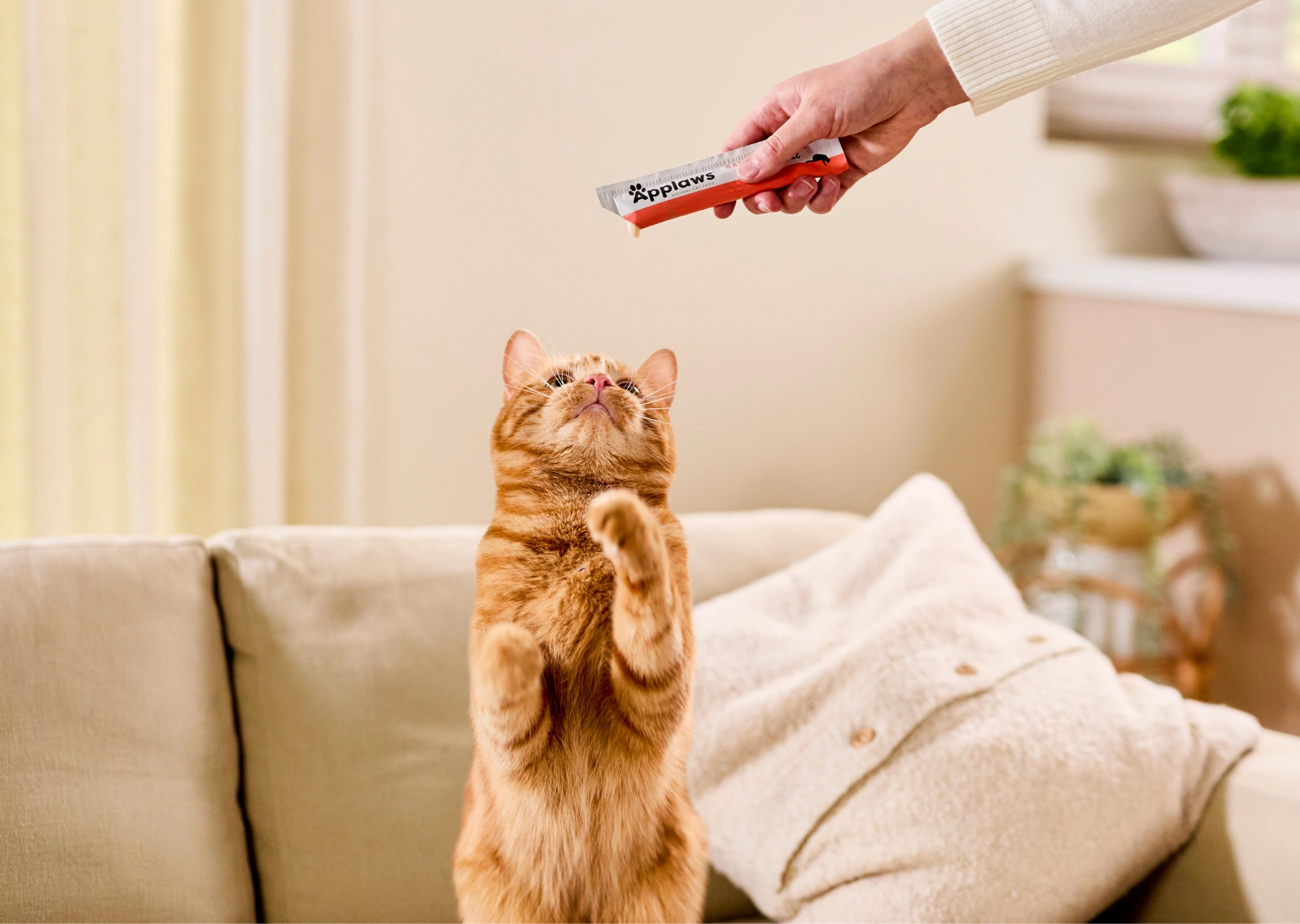
How To Train a Cat
To train a cat, reward the behaviour you want to encourage with a treat, toy, or praise. Use one clear cue, give the reward immediately, and keep each session short. Start with simple skills such as responding to their name, coming when called, sitting, or touching a target.
Applaws UK
27/11/2026
To train a cat, reward the behaviour you want to encourage with a treat, toy or praise. Use one clear cue, reward them immediately and keep each session short.
Start with simple skills such as responding to their name, coming when called, sitting or touching a target. The secret is to find what motivates your cat and make training feel like another opportunity to explore.
Short sessions. Clear cues. Rewards worth working for.
Can Cats Be Trained?
Yes, cats can be trained using rewards and consistent cues.
Cats learn by making connections between their behaviour and what happens next. If sitting earns a tasty reward, for example, they’re more likely to try sitting again. Positive reinforcement simply means rewarding a behaviour you want your cat to repeat.
Cats already show this ability in everyday life. They recognise familiar routines, remember where food is kept, and often appear the moment they hear a cupboard open.
Their memory, adaptability, and problem-solving skills are all signs of feline intelligence. Discover more in Are Cats Intelligent Animals?
How Does Cat Training Work?
Successful cat training follows a simple pattern:
- Give a clear cue: Use the same word or hand signal each time
- Wait for the behaviour: Give your cat time to work it out
- Mark the moment: Say “yes” or use a clicker as soon as they succeed
- Give the reward: Reward them immediately so the connection is clear
- Repeat: Practise in short, positive sessions
Positive reinforcement can use food, toys, praise, or affection. What matters is choosing something your cat genuinely values and giving it immediately after the desired behaviour.
Think of it less like a lesson and more like a puzzle your cat gets to solve.
How To Start Training Your Cat
A little preparation makes it easier for your cat to understand what you’re asking.
1. Choose A Quiet Place
Begin somewhere familiar without too many distractions. A quiet room gives your cat a better chance of focusing on you rather than the view from the window.
Find The Right Reward
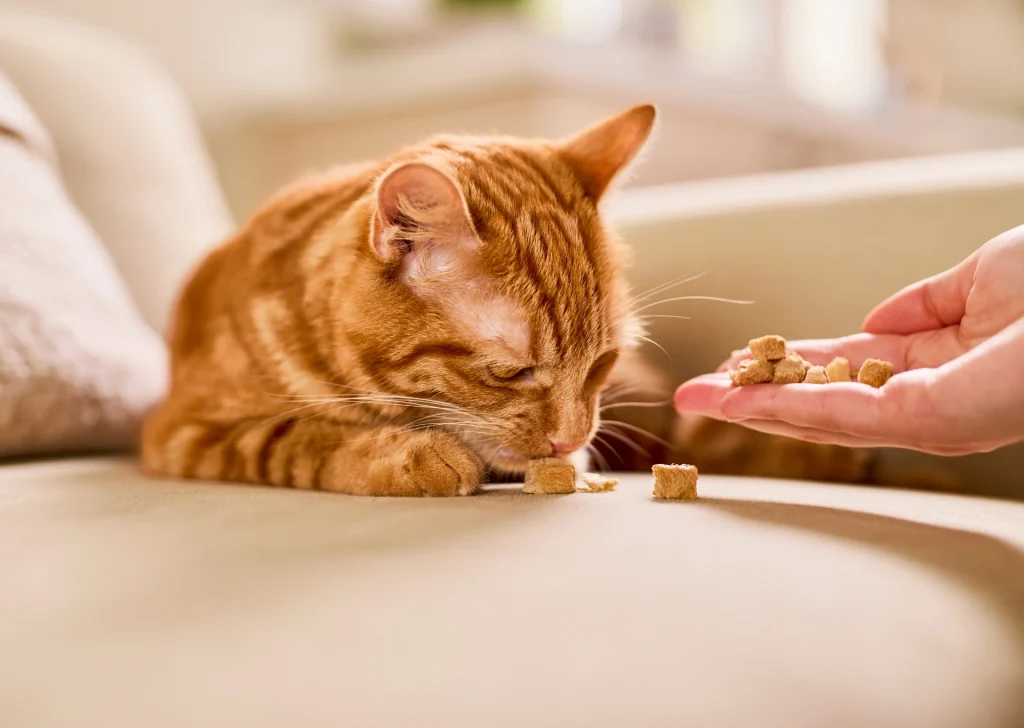
Some cats are motivated by toys or attention. For many, a tasty treat makes the goal much clearer.
Choose a reward your cat can enjoy between quick repetitions. Our Applaws treats range includes lickable, freeze-dried and fillet treats in a variety of flavours and textures.
Use a small amount for each successful attempt and account for treats within your cat’s overall diet. Rewards should support the training session rather than replace their usual food.
3. Choose One Cue
Use one short word or clear hand signal for each behaviour. Changing between “sit”, “sit down”, and “down you go” can make the task harder to understand.
Keep it simple: one cue, one action.
Keep Sessions Short
Cats learn best when they’re interested and relaxed. Short sessions help training remain positive, particularly when your cat is learning something new. Positive reinforcement guidance recommends using rewards and avoiding punishment. Read the Feline Veterinary Medical Association’s positive reinforcement training toolkit.
If your cat walks away, starts grooming, or becomes distracted, finish the session and try again another time.
How to Teach a Cat Tricks: 5 Easy Tricks to Try
Start with behaviours your cat is already likely to offer. You can then reward and shape them into a reliable response.
1. Teach Your Cat Their Name
Goal: Your cat looks towards you when they hear their name.
How to teach it:
- Sit close to your cat in a quiet space
- Say their name once in a clear, friendly voice
- Reward them as soon as they look towards you
- Repeat from slightly farther away
- Gradually practise with mild distractions nearby
Avoid repeating their name several times. Give them a moment to respond before trying again.
2. Teach Your Cat to Come When Called
Goal: Your cat walks towards you after hearing their cue.
How to teach it:
- Begin a short distance away
- Say your cat’s name followed by “come”
- Show them the reward if they need encouragement
- Reward them as soon as they reach you
- Increase the distance gradually
Calling a cat before feeding and rewarding them when they appear can help them connect the cue with a positive outcome.
Never use the cue only before something they may dislike, such as getting into their carrier. You want coming to you to remain a positive discovery.
3. Teach Your Cat to Sit
Goal: Your cat sits when given a word or hand signal.
How to teach it:
- Hold a reward close to your cat’s nose
- Move it slowly upwards and slightly behind their head
- Wait as they follow it and naturally lower into a sitting position
- Say “yes” or click at the moment they sit
- Give the reward immediately
Once they understand the movement, introduce the word “sit” just before guiding them.
4. Teach Your Cat a High Five
Goal: Your cat touches your open hand with their paw.
How to teach it:
- Hold a reward inside your closed hand
- Let your cat investigate it
- Wait for them to touch your hand with a paw
- Mark and reward the movement
- Gradually replace your closed hand with an open palm
Reward small steps at first. A slight paw lift is still progress.
5. Teach Your Cat to Touch a Target
Goal: Your cat touches an object with their nose.
How to teach it:
- Hold a target, such as the end of a wooden spoon, near your cat
- Wait for them to investigate it
- Mark and reward the moment their nose touches it
- Move the target a short distance away
- Add a cue such as “touch” once the behaviour becomes consistent
Target training can help guide a cat towards a particular spot without lifting or forcing them. It also turns their natural curiosity into the main part of the game.
What Should You Avoid When Training a Cat?
Cat training should feel safe and rewarding.
Avoid:
- Shouting or punishment
- Physically forcing your cat into position
- Repeating a cue continuously
- Training when your cat appears tired or restless
- Making sessions too long
- Rewarding long after the behaviour happened
- Expecting every cat to learn at the same pace
Punishment can create stress or fear, while positive reinforcement rewards the behaviour you want your cat to repeat.
If a session isn’t working, pause. Your cat may be distracted, full, or simply more interested in another adventure.
Frequently Asked Questions
What Age Should You Start Training a Cat?
Cats can learn at different life stages. The training method should suit their age, health, attention, and mobility. Keep sessions gentle, short, and appropriate for the individual cat.
How Long Does It Take to Train a Cat?
There is no set timeframe. The behaviour, reward, surroundings, and individual cat can all affect progress. Focus on small improvements and practise consistently rather than rushing towards a finished trick.
Can You Train an Older Cat?
Older cats can still learn new cues and routines. Select comfortable behaviours that suit their mobility, and allow plenty of time to respond. Speak to your vet if you’re unsure whether a particular movement is suitable.
Why Is My Cat Not Responding to Training?
Your cat may be distracted, tired, uncomfortable, or uninterested in the reward. Move to a quieter place, try a more motivating reward, and make the task easier. If they walk away, end the session positively and return to it later.
Can You Train Two Cats at the Same Time?
Separate sessions are usually easier when each cat is learning a new behaviour. This allows you to reward the correct cat at the right moment. Once both understand the cue individually, you can gradually practise with them in the same space.
So, How Do You Train a Cat?
Train your cat by rewarding the behaviours you want them to repeat. Use one clear cue, mark success immediately, and follow it with something your cat enjoys.
Begin with one simple skill. Keep sessions short and let your cat set the pace.
They might learn to sit, offer a high five, or appear whenever they hear their name. Either way, training gives an inquisitive mind something new to explore.
Curious cat. Clear cue. Tasty reward.