






Can Cats Eat Coconut?
Cats can eat small amounts of coconut, but it is high in fat and offers little nutritional benefit. Too much coconut or coconut oil can cause digestive upset, so it should only be given occasionally.
Applaws UK
01/09/2026
It’s one of those ingredients that pops up everywhere — in cooking, snacks, even skincare — and if your curious cat is nearby, they’ll usually want to see what’s going on.
So, can cats eat coconut?
In short: yes, but only in very small amounts — and it’s not something they need.
Coconut isn’t toxic to cats, but it’s rich, high in fat, and not part of a diet they’re naturally equipped for.
Is Coconut Good for Cats?
Not really.
While a small amount isn’t harmful, coconut doesn’t provide any real nutritional benefit for cats.
It’s:
- High in fat
- Plant-based
- Easy to overfeed without realising
Cats are obligate carnivores, so their nutrition should come from meat rather than foods like coconut.
Can Cats Eat Coconut Oil?
Coconut oil is often mentioned as a supplement, but for cats, it’s not necessary.
Because it’s almost entirely fat, too much can lead to:
- Digestive upset
- Loose stools
- Weight gain over time
A very small amount occasionally isn’t harmful, but it doesn’t need to be added to their diet.
Can Cats Eat Coconut Shavings?
Plain, unsweetened coconut shavings are usually safe in very small amounts.
However, they can be:
- Harder to digest
- More concentrated in fat
Anything sweetened or flavoured should always be avoided.
Can Cats Eat Coconut Ice Cream?
No — this is best avoided.
Even dairy-free versions often contain:
- Added sugar
- Flavourings
- Fat-heavy ingredients
These aren’t suitable for cats and can easily upset their stomach.
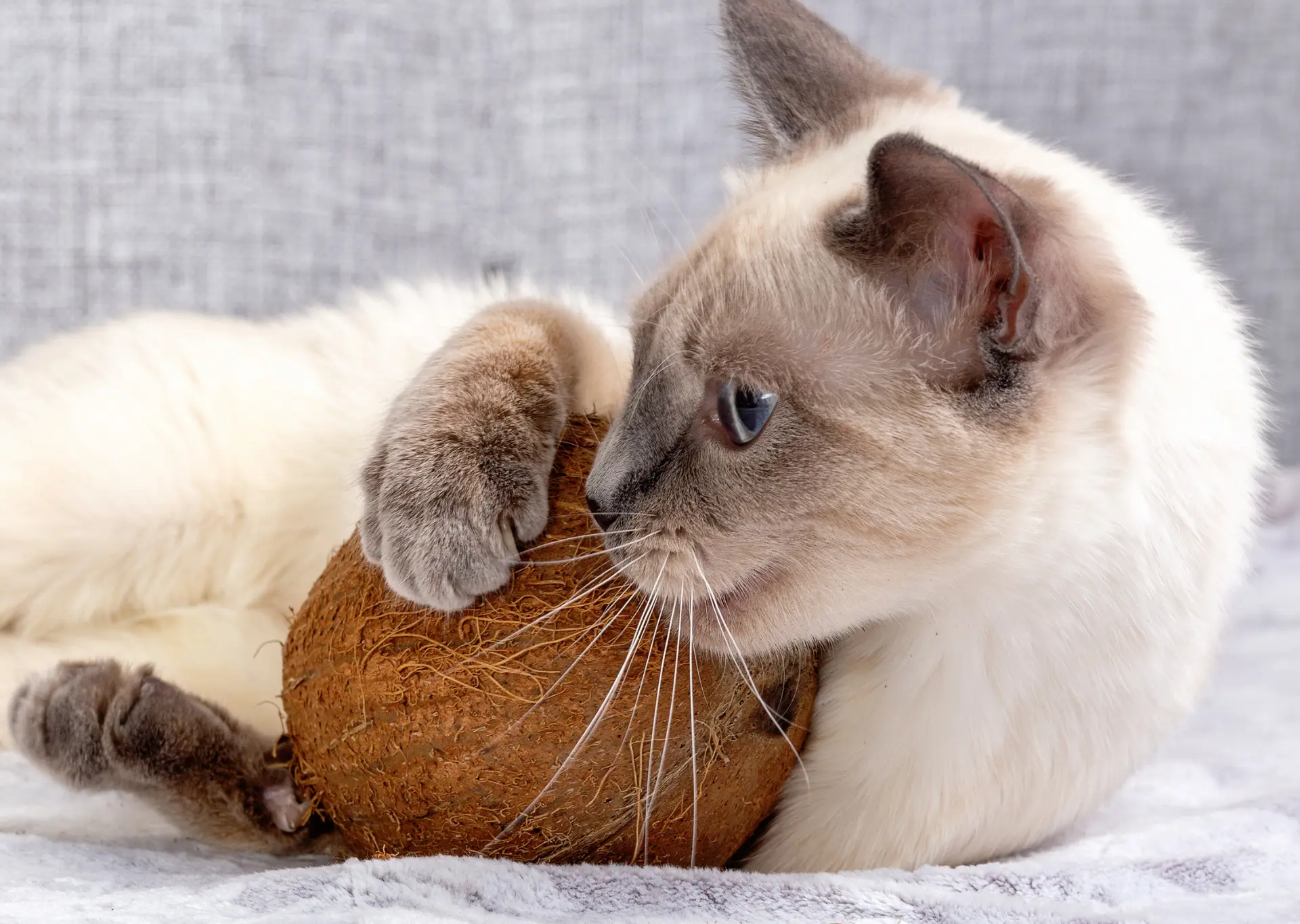
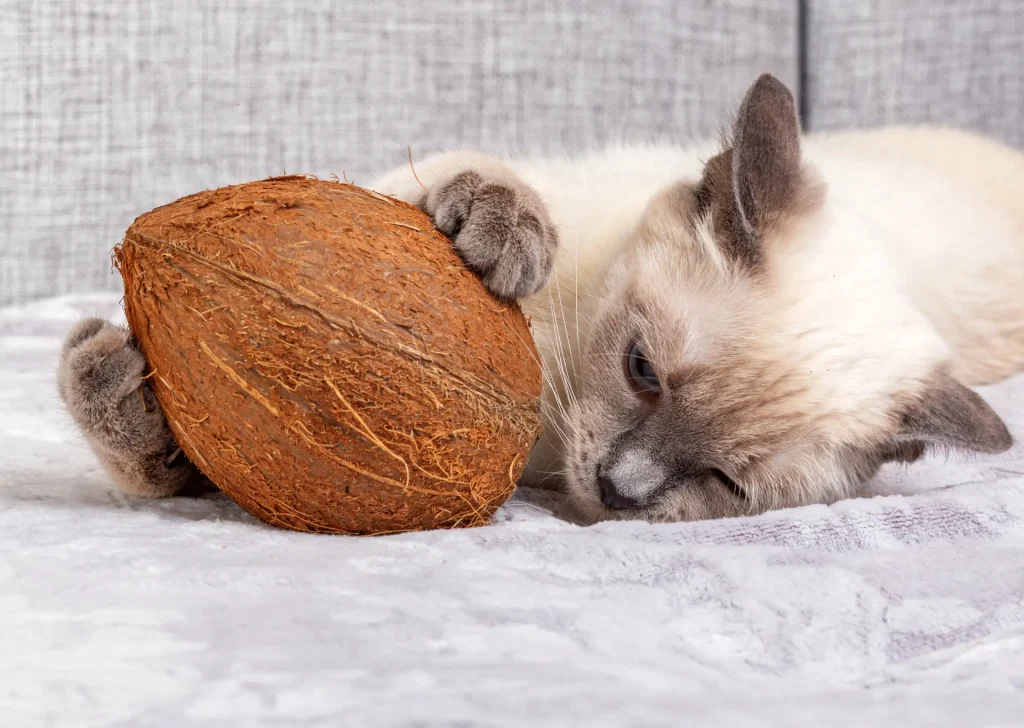
Why Some Cats Show Interest in Coconut
Cats don’t naturally seek out coconut, but they are curious.
They might investigate because of:
- The smell
- The texture
- The fact you’re eating it!
It’s less about liking the flavour, and more about exploring something new.
What Happens If a Cat Eats Too Much Coconut?
Because of the high fat content, too much coconut is more likely to cause digestive issues.
You might notice:
- Vomiting
- Diarrhoea
- Lethargy
If symptoms appear or don’t settle, it’s best to speak to your vet.
FAQs
- Is coconut toxic to cats?
No — but it should only be given in very small amounts. - Can kittens eat coconut?
It’s best to avoid it, as their digestive systems are more sensitive. - Can I add coconut oil to my cat’s food?
It’s not necessary and may cause digestive upset if used regularly.
A Better Way to Treat Your Cat
Cats often take an interest in human food, but not everything they show curiosity towards is right for them.
Simple, real-meat recipes, like Applaws, are designed around what cats naturally need.
If you’re unsure about other foods, you can explore more of our guides: