









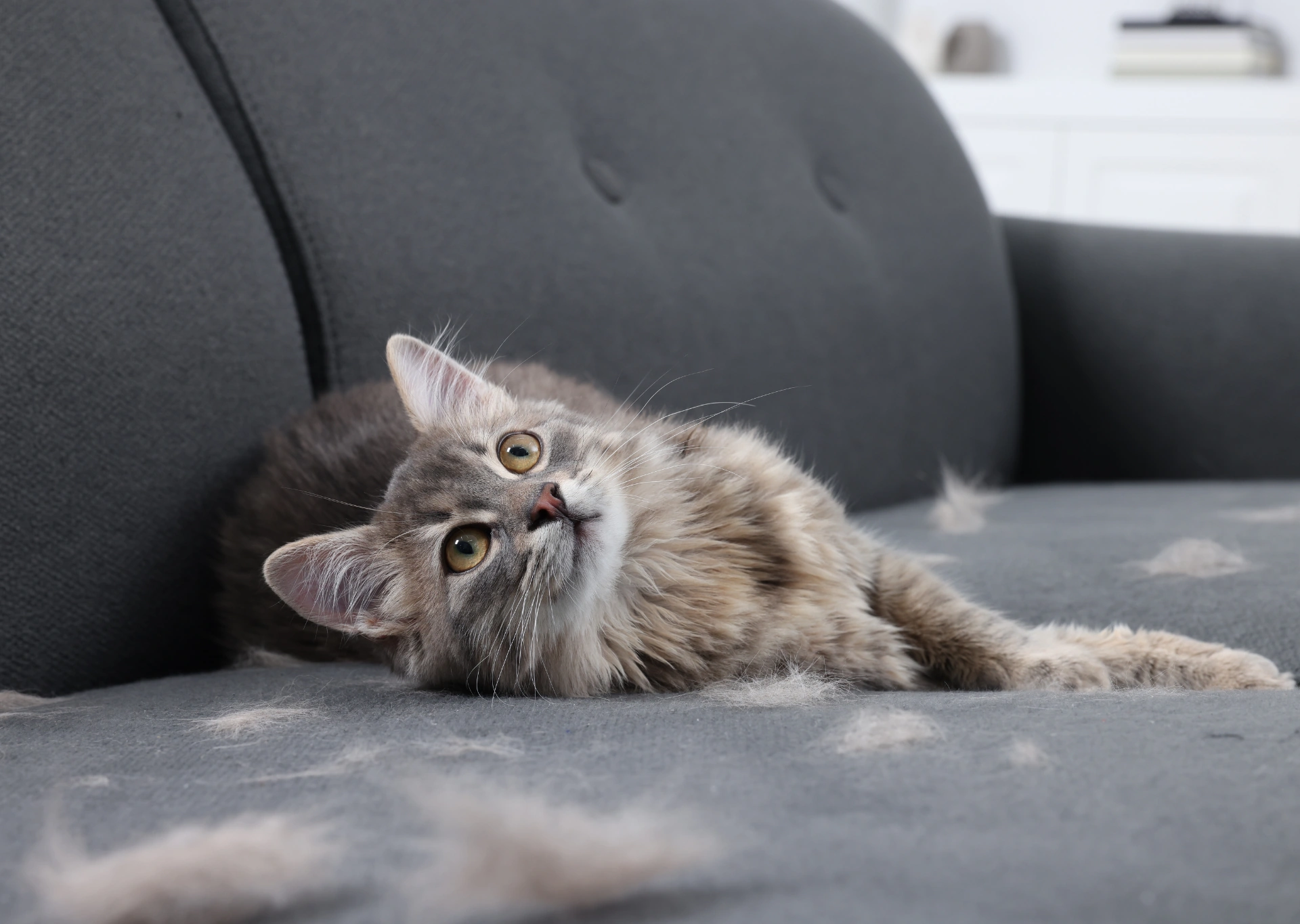
Why Is My Cat Shedding So Much?
Cats may shed more because of seasonal coat changes, their breed, indoor living, stress, parasites, or skin conditions. Regular brushing can help manage normal shedding. Speak to your vet if the hair loss is sudden, uneven, or accompanied by bald patches, irritated skin, excessive scratching, or changes in behaviour.
Applaws UK
16/10/2026
Is your cat leaving fluffy reminders of themselves on the sofa, your clothes, and just about every corner of the house?
Shedding is a natural way for cats to lose old or damaged hairs as new ones grow. But if the fluff suddenly seems to be multiplying, it’s understandable to wonder why your cat is shedding so much and whether it’s normal.
The answer often depends on your cat’s usual coat, lifestyle, and surroundings. The seasons can play a part, but breed, stress, parasites, and skin conditions may also influence how much fur they lose.
Is It Normal for Cats to Shed So Much?
Yes, it can be completely normal for cats to shed a lot.
Every cat has their own shedding pattern. Some lose a small amount of fur each day, while others leave a trail wherever they settle. Breed and coat length can also make loose fur more noticeable.
Many cats shed more during seasonal changes. In spring, they may lose their thicker winter coat as the weather becomes warmer. Another period of shedding can happen in autumn as their coat changes again.
Normal shedding usually happens evenly across the coat. Sudden hair loss, bald patches, or irritated skin could indicate that something else is going on.
Do Indoor Cats Shed More Than Outdoor Cats?
Not necessarily. Indoor cats may not shed more overall, but they can shed more consistently throughout the year.
Outdoor cats experience natural changes in daylight and temperature, so their shedding may follow a clearer seasonal pattern. Indoor cats live in a more controlled environment, which can make shedding feel like a year-round event rather than an obvious seasonal change.
So, if your indoor explorer leaves fur behind in every season, you’re probably not imagining it. Their shedding pattern may simply be more consistent.
Do Some Cat Breeds Shed More Than Others?
Yes. A cat’s breed and coat type can affect how noticeable their shedding is.
Long-haired breeds such as Maine Coons, Persians, and Ragdolls can shed a particularly visible amount of loose fur. Cats with thicker coats may also need more frequent grooming, especially during seasonal coat changes.
Short-haired cats still shed, but their loose hairs can be less obvious around the home. Ultimately, the best guide is what’s normal for your individual cat.
Different cats. Different coats. Different amounts of fluff on the sofa.
Why Is My Cat Shedding More Than Usual?
Once you understand your cat’s usual shedding pattern, it becomes easier to recognise when something has changed.
Here are five possible reasons for an increase in shedding.
- Cat Shedding Season and Seasonal Coat Changes: Seasonal shedding is one of the most common explanations. Cats may shed their thicker winter coat as the weather becomes warmer, then change their coat again as colder weather approaches. This should usually happen evenly rather than causing isolated bald patches.
- Stress Or Changes at Home: Cats quickly become familiar with the rhythms of home life. Moving house, introducing another pet, visiting the vet, or experiencing changes to their usual routine can cause stress. Some cats may also groom themselves more when stressed, making fur loss more noticeable. Familiar resting spots, a predictable routine, and quiet places to retreat can help your cat feel more settled. You can also explore the signs of a happy cat to better understand their everyday behaviour.
- Parasites: Fleas, ticks, and mites can irritate a cat’s skin. Cats may then scratch, lick, or bite at their coat to find relief, leading to increased hair loss. Look out for frequent scratching, irritated skin, or thinning areas of fur. Your vet can help identify the cause and recommend suitable treatment.
- Skin Irritation or Infection: Allergies and skin infections can affect a cat’s coat. Fungal infections such as ringworm may also cause hair loss. This can look different from regular shedding. You may notice sore skin, flakes, or hair loss in particular areas rather than loose fur across the whole coat.
- An Underlying Health Conditions: Sometimes, excessive shedding or hair loss can be connected to an underlying health concern. If the change is sudden, significant, or accompanied by other symptoms, speak to your vet. Several conditions can affect a cat’s skin and coat, so avoid trying to diagnose the cause from shedding alone.
When Should I Worry About My Cat’s Shedding?
Shedding is usually nothing to worry about when your cat’s skin and coat otherwise appear healthy.
Contact your vet if you notice:
- Bald or thinning patches
- Red, sore, or irritated skin
- Excessive scratching or overgrooming
- Sudden or dramatic hair loss
- Fur coming out unevenly
- Changes in appetite
- Changes in behaviour
Bald patches, irritated skin, and shedding that appears excessive compared with your cat’s usual pattern can indicate that veterinary attention is needed.
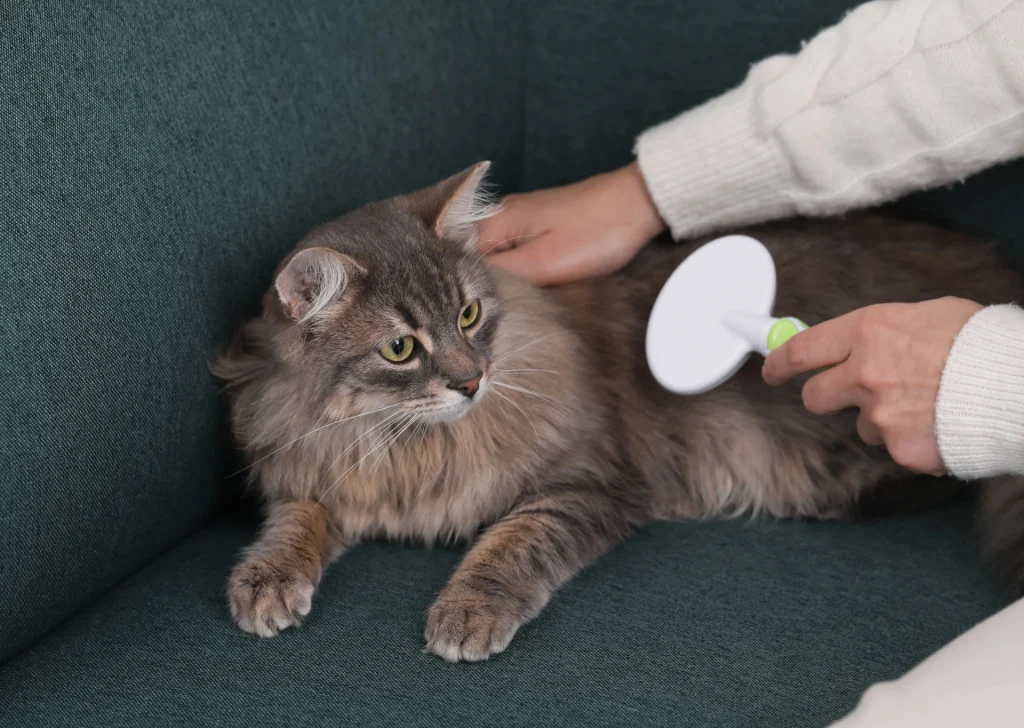
4 Tips to Help Reduce Cat Shedding
You can’t stop healthy shedding completely, but you can help manage loose fur and keep a closer eye on your cat’s coat.
- Brush Your Cat Regularly: Regular brushing collects loose fur before it finds its way onto your clothes and furniture. It also gives you an opportunity to check your cat’s skin. Long-haired cats may benefit from more frequent grooming than short-haired cats. Keep each session calm and gentle. Let your cat investigate the brush first, then begin slowly in areas where they’re comfortable being touched.
- Check Their Skin and Coat: Use grooming time for a quick coat check. Look for:
- Bald patches
- Redness
- Flaky skin
- Tangles or matting
- Signs of fleas
- Areas your cat repeatedly scratches or licks
- Keep Their Routine Familiar: If your cat’s shedding appears to increase during changes at home, focus on familiarity. Keep everyday routines as consistent as possible. Make sure your cat still has access to their favourite resting places, hiding spots, and quiet corners. A little calm can go a long way when a curious cat’s world suddenly changes.
- Support Their Everyday Wellbeing: Fresh water, appropriate food, regular play, grooming, and routine veterinary care all contribute to your cat’s overall wellbeing. If you’re concerned that your cat’s diet may be affecting their skin or coat, ask your vet to review everything they eat. Avoid relying on a single food or ingredient as a solution for unusual shedding. Applaws creates natural recipes made with real meat and fish, offering different flavours and textures for curious cats to explore at mealtimes.
Frequently Asked Questions
Why Is My Cat Shedding So Much All of a Sudden?
A sudden increase in shedding may be linked to stress, parasites, skin irritation, infection, or another health concern. Contact your vet if you also notice bald patches, sore skin, overgrooming, or changes in your cat’s behaviour.
How Much Cat Shedding Is Normal?
There isn’t one normal amount for every cat. Breed, coat type, environment, and the time of year can all influence shedding. Pay attention to your cat’s usual pattern and investigate any sudden or significant change.
Can Diet Affect Cat Shedding?
A cat’s overall diet can influence the condition of their skin and coat. If increased shedding appears alongside a dull coat or other changes, ask your vet to review your cat’s complete diet rather than changing it based on shedding alone.
Can Stress Cause a Cat to Shed More?
Yes. Stress can contribute to increased shedding or overgrooming in some cats. Moving house, visiting the vet, introducing another pet, or changing a familiar routine may all affect them.
Does Brushing Reduce Cat Shedding?
Brushing won’t stop a cat’s natural shedding cycle, but it can collect loose hairs before they end up around your home. It also provides a useful opportunity to check your cat’s skin and coat for changes.
So, Why Is My Cat Shedding So Much?
In most cases, shedding is a normal part of your cat’s natural coat cycle.
Their breed, surroundings, the seasons, and changes at home can all affect how much fur they lose. What matters most is recognising your cat’s usual pattern.
An extra layer of fluff on the sofa may be perfectly normal. Sudden hair loss, irritated skin, or bald patches need a closer look from your vet.
In the meantime: keep the brush nearby. Your favourite jumper will thank you.