









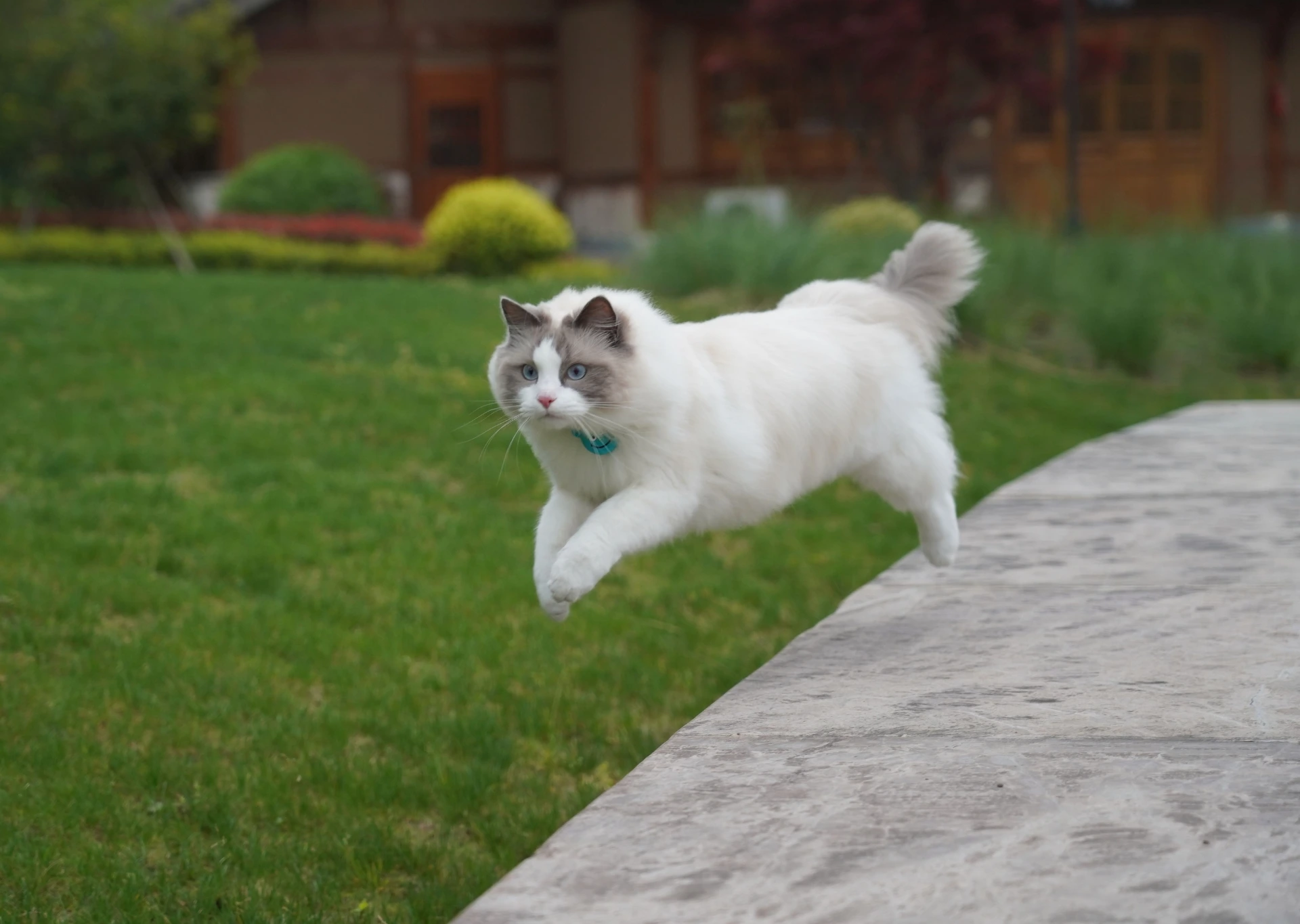
Why Do Cats Land On Their Feet?
Cats land on their feet thanks to their righting reflex, a natural ability that lets them twist mid‑air. Their flexible spine, muscular bodies and fur help them adjust and fall safely; though factors like height, age and health can affect this.
Applaws UK
15/06/2026
As many people (even non-cat-owners!) know, cats are often able to land on their feet, even if falling from a great height. While this physical ability may seem magical and mysterious, there are some very interesting scientific reasons that cats often land on their feet. Read on to learn all about it!
CaRighting reflex
Cats have something called the “righting reflex” that (as I’m sure you can guess) helps them to “right” themselves as they fall to the ground. The righting reflex begins to develop in kittens when they are about 3-4 weeks old!
This reflex enables them to gauge where they are as they fall, and agilely adjust their bodies so that they land on their feet. When this righting reflex kicks in, cats are able to rotate the back halves of their bodies and the front halves of their bodies in different directions so that they can land properly.
Ever joked that “cats are liquid” because of their spinal flexibility? It’s that same flexibility that helps them to twist midair and land with their feet on the ground.
Beyond that spinal flexibility, cats have several other physical features that mean that they can fall gracefully such as their muscular bodies and their fur that can help slow their fall.
Why might a cat not land on their feet?
Interestingly enough, if the height of the fall is too short for a cat to be able to judge their positioning and adjust how they’re falling, they may not be able to land on their feet. So, the distance of the fall needs to be far enough that they have the time to innately understand how to adjust themselves during the fall.
Besides the height, there are other factors that could affect whether or not a cat can successfully land on their feet such as their age and health, their breed, and the surface they’re landing on.
While cats are obviously excellent at landing on their feet, no one wants their pet to have to deal with a fall, so make sure to keep your cats safest by giving them plenty of safe jumping options like cat trees or shelves that are spaced a safe enough distance for them to clear a jump. Also, recognize that as your pet gets older or if they deal with health issues, they may not be able to jump as well or fall in such a way that they don’t get injured, so make sure to keep their toys and perches closer to the floor. Positioning furniture to allow a series of step ups and mini jumps, alongside nonslip matting on smoother surfaces helps less mobile, and older cats to land on all four paws.