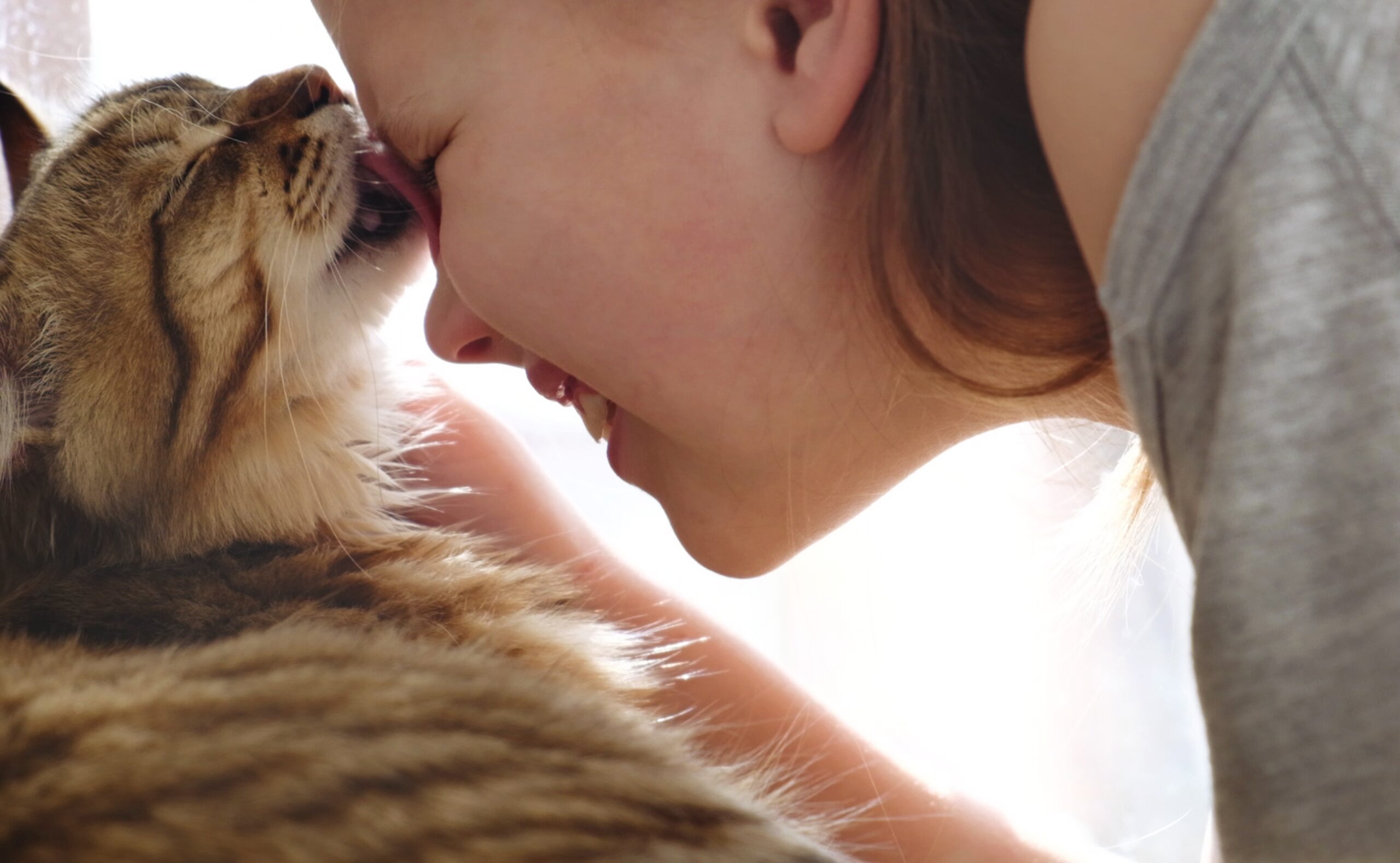
Cat licking a woman's face

Why Does My Cat Lick My Face?

Who doesn't love to get woken up by a scratchy tongue in the morning? Our resident vet Dr. Jo discusses why cats lick our faces and if we should let them.

02/16/2026

If you’ve ever woken up to a scratchy tongue on your cheek, you’ve likely asked yourself: why does my cat lick my face? While it might seem like odd behaviour, licking is a key part of how cats communicate.

We asked cat vet and feline behaviourist Dr Jo Lewis for her insight. She explains,

Cat tongues feel like sandpaper because they are covered in tiny barbs. It’s a handy bit of kit for licking meat off bones and combing through fur. But when your cats lick you, believe it or not, they are actually trying to show you their softer side. Mother cats lick their kittens, and adult cats within a social group lick their family and friends – and just like when they lick you, that’s all about sharing body scents, and offering affection and comfort. It’d be great if those tongue barbs were retractable though, wouldn’t it!

Dr Jo Lewis MRCVS, The Cat Vet thecatvet.co.uk

So yes, those unexpected licks are often a form of flattery.

What Does It Mean When a Cat Licks Your Face?

Here are some of the most common reasons your cat might be licking you:

  • Affection and Bonding: Cats groom those they trust and that includes you!
  • Marking You as Theirs: Licking transfers their scent, a subtle way of claiming you as part of their group.
  • Seeking Comfort: Licking can be self-soothing, especially in moments of stress or change.
  • Tasting Something Interesting: Got crumbs or lotion on your face? Cats have sensitive noses and might just be curious.

Is It Okay to Let My Cat Lick My Face?

Occasional licking is fine for most cats and owners. Just remember, a cat’s mouth contains bacteria, so avoid letting them lick around your mouth, eyes, or any broken skin.

If your cat’s licking becomes a bit much, try gently redirecting the behaviour. Offering a tasty distraction like Applaws Lickable Treats gives them a soothing, rewarding alternative that’s perfect for bonding moments without the face-licking.

If licking becomes excessive, especially alongside changes in behaviour, it’s worth speaking to your vet. It could signal stress or an underlying health concern. Want to learn more about your cat’s behavior? Our blog is full of insights — we’ve got expert-backed tips to help you support their wellbeing all year round.