Puppy Feeding 101 — What and How Often to Feed Your Pup
Why Feeding Your Puppy Properly Matters
Nutrition is the foundation of good puppy care. During the first year of life, your puppy grows rapidly — developing strong bones, muscles, and a healthy immune system. Choosing the right food and feeding schedule ensures they grow steadily and stay energetic, playful, and healthy.
If you’re just starting your puppy journey, check out our Basic Puppy Care Checklist — Your First 12 Weeks at Home for everything you need before your pup arrives.
Understanding Puppy Nutrition: What Puppies Need to Grow
Essential Nutrients Every Puppy Needs
Puppies have different nutritional requirements than adult dogs. Their food must provide:
- High-quality protein for muscle development
- Calcium and phosphorus for healthy bones and teeth
- Healthy fats for brain growth and energy
- Vitamins and minerals for immunity and development
Why Puppies Need Special Puppy Food
Adult dog food doesn’t meet a growing puppy’s needs. Puppy food is specially formulated to support rapid growth, with balanced nutrients and smaller kibble sizes for easy chewing.
Tip: Always choose a complete and balanced puppy food that meets FEDIAF or AAFCO nutritional standards.
How Often Should You Feed Your Puppy?
Feeding frequency changes as your puppy grows:
| Puppy Age | Number of Meals Per Day | Feeding Notes |
| 8–12 weeks | 4 small meals | Puppies have small stomachs but high energy needs. |
| 3–6 months | 3 meals | Begin extending time between meals. |
| 6–12 months | 2 meals | Most puppies transition to twice-daily feeding. |
Feeding your puppy at the same times each day helps establish routine — which supports toilet training and consistent behaviour.
If your pup is still settling in, read our How to Socialise Your Puppy — Steps for Confidence & Good Behaviour to build trust and confidence around new experiences, including mealtimes.
Choosing the Best Puppy Food for Your Puppy’s Size and Breed
Small Breed Puppies
Small breeds have fast metabolisms — they need more calories per kilo than larger breeds.
Choose high-energy puppy food with smaller kibble pieces.
Large Breed Puppies
Large and giant breed puppies need controlled growth to avoid bone and joint issues.
Choose large-breed puppy food with moderate calories and balanced calcium levels.
Transitioning Between Puppy Food and Adult Food
Most puppies can switch to adult food between 12–18 months.
Make the change gradually over 7 days, mixing increasing amounts of adult food with puppy food.
Slow transitions prevent tummy upsets and help your pup adjust smoothly.
Water and Hydration: The Unsung Part of Puppy Feeding
Fresh water should be available at all times. Puppies can dehydrate quickly, especially after play or exercise.
- Clean bowls daily
- Use non-slip, shallow bowls for smaller breeds
- Keep an extra water bowl in their play area
Wet vs. Dry Puppy Food — Which Is Better?
Dry Puppy Food (Kibble)
- Helps keep teeth clean
- Easier to measure portions
- Longer shelf life
Wet Puppy Food
- More flavourful and aromatic (great for fussy eaters)
- Higher moisture content (helps with hydration)
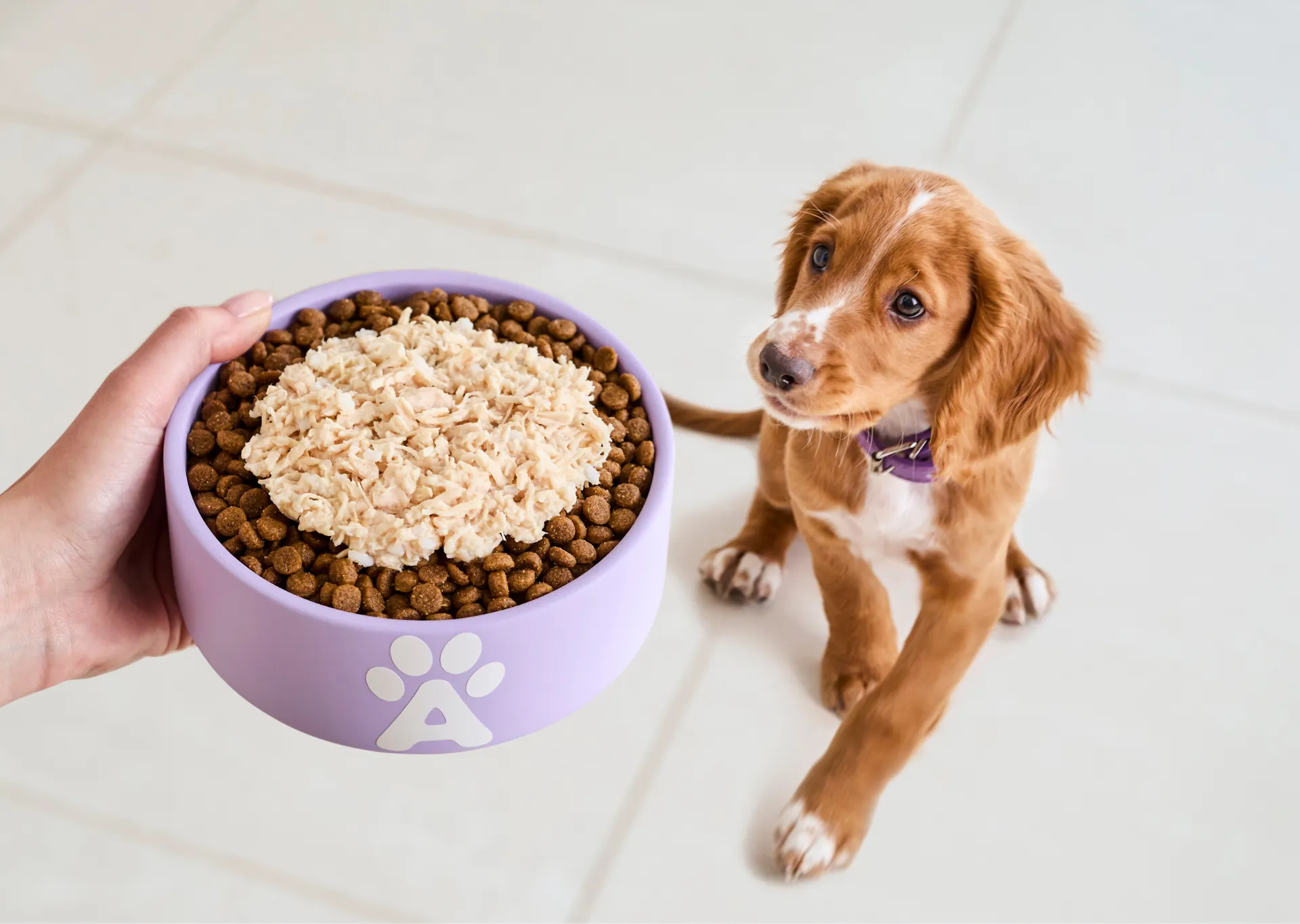
Many owners choose to mix wet and dry food to combine the benefits of both.
Stick to the same brand when mixing food types to maintain consistent nutrition.
Treats, Training Rewards, and Feeding During Socialisation
Treats are essential tools for training and socialising your puppy.
Use small, healthy treats to reward calm behaviour and obedience — not just indulgence.
Remember: treats should make up no more than 10% of your puppy’s daily calories.
You can find helpful reward-based training advice in our How to Socialise Your Puppy — Steps for Confidence & Good Behaviour blog.
Puppy Feeding and Health: When to Speak to Your Vet
Signs Your Puppy’s Diet Might Need Adjusting
- Diarrhoea or soft stools
- Dull coat or flaky skin
- Low energy
- Rapid weight gain or loss
Your vet can help you tailor your puppy’s diet and advise on portion sizes for their breed and activity level.
For the healthiest start, make sure your puppy’s vaccinations are up to date before socialising or attending puppy classes.
Puppy Feeding FAQs
How much should I feed my puppy?
Follow the feeding guide on your food packaging — then adjust based on your puppy’s condition and energy level.
Can I give my puppy milk?
No. Most dogs are lactose intolerant after weaning. Always provide water instead.
When should I switch to adult dog food?
Usually around 12 months, but giant breeds may need puppy food for up to 18 months.
What’s the best feeding routine?
Consistent mealtimes, calm environments, and measured portions help build good habits early on.
Feeding your puppy properly supports healthy growth, strong bones, and good behaviour.
Stick to a regular feeding routine, choose complete puppy food, and transition gradually as your pup grows.
For a well-rounded start, explore our:
- Basic Puppy Care Checklist — Your First 12 Weeks at Home
- Your Puppy Vaccination Guide — What Jabs They Need & When
- How to Socialise Your Puppy — Steps for Confidence & Good Behaviour
Together, these guides give you everything you need to raise a confident, healthy puppy from day one.