
Your Puppy Vaccination Guide: What Jabs They Need & When
Why Puppy Vaccinations Are Essential for Your Puppy’s Health
Puppies are curious explorers but before they’re fully vaccinated, their developing immune systems can’t fight off serious diseases. That’s why puppy vaccinations are a vital part of early care.
Vaccines protect your pup from life-threatening illnesses like parvovirus, distemper, and leptospirosis, which are still found in parts of the UK. They also help prevent the spread of infection, keeping other dogs in your community safe too.
Understanding Puppy Vaccines: How They Work and Why They Matter
What Puppy Vaccines Protect Against
Core puppy vaccines protect against the most dangerous diseases:
| Disease | What It Does | Why It’s Dangerous |
| Canine Parvovirus | Attacks intestines and immune system | Severe vomiting, diarrhoea, often fatal in unvaccinated puppies |
| Distemper | Affects the nervous system and respiratory tract | Can cause seizures, fever, and permanent damage |
| Infectious Hepatitis (Adenovirus) | Affects the liver and kidneys | Rapid onset, can be fatal |
| Leptospirosis | Bacterial infection spread by water and wildlife | Causes kidney and liver failure; can spread to humans |
Core vs. Non-Core Puppy Vaccines Explained
- Core vaccines: Recommended for all puppies (parvovirus, distemper, hepatitis, leptospirosis).
- Non-core vaccines: Given based on lifestyle and risk. These include kennel cough, rabies (for travel), and canine influenza.
Your vet will tailor your puppy’s vaccination plan based on their environment and lifestyle.
Puppy Vaccination Schedule: When Puppies Need Their Jabs
Puppy Vaccination Timeline: From 6 Weeks to 1 Year
The typical UK puppy vaccination schedule looks like this:
| Age | What It Does Vaccine | Purpose |
| 6–8 weeks | 6–12 months | Begins protection against core diseases |
| 10–12 weeks | Second vaccination | Strengthens immunity |
| 12–16 weeks | Leptospirosis top-up (if needed) | Completes full protection |
| 6–12 months | First booster | Ensures long-term immunity |
Puppies are usually safe to explore outdoors 1–2 weeks after their second vaccination, depending on your vet’s advice.
Booster Vaccinations for Puppies and Adult Dogs
After the first year, boosters are needed to maintain protection. Usually annually for leptospirosis and every 3 years for distemper, parvovirus, and hepatitis.
Can Puppy Vaccination Schedules Vary?
Yes – timing can differ based on your vet’s advice, the vaccine brand, and local risk factors. For example, puppies in rural or farming areas may need leptospirosis boosters more often due to exposure to wildlife or standing water.
Always follow your vet’s specific guidance to keep your puppy protected and healthy.
Preparing Your Puppy for Their First Vaccination Appointment
How to Make Your Puppy’s Vet Visit Calm and Positive
- Bring your puppy’s blanket or toy for comfort.
- Use treats to make the experience rewarding.
- Speak softly and stay calm — your puppy takes cues from you.
- Let them explore the waiting room and get used to the sights and smells.
Many vets offer “puppy welcome” appointments to help make first visits a positive experience.
What to Expect During Your Puppy’s Vaccinations
Your vet will:
- Weigh your puppy and check their overall health.
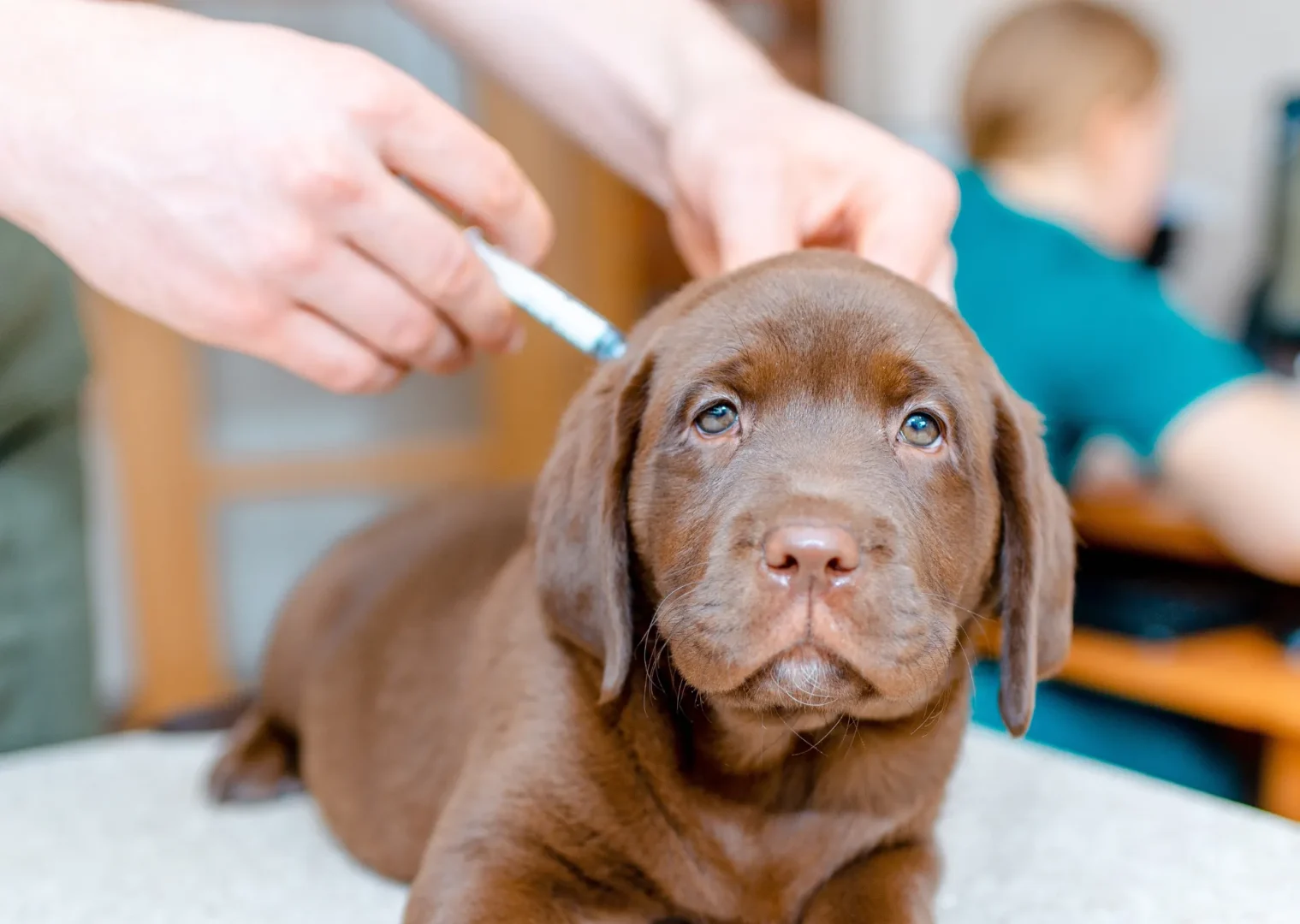
- Administer the vaccine (a small injection, usually in the scruff or leg).
- Provide a vaccination record card and discuss your next appointment.
The whole process is quick — most puppies barely notice the injection!
Caring for Your Puppy After Vaccinations
Normal Reactions After Puppy Jabs
- Mild, temporary reactions are common and nothing to worry about:
- Sleepiness or low energy
- Mild swelling at the injection site
- Slight loss of appetite
Let your puppy rest and provide plenty of water and reassurance.
When to Contact Your Vet About Vaccine Side Effects
Contact your vet immediately if your puppy:
- Vomits or develops diarrhoea
- Has difficulty breathing
- Shows swelling around the face or muzzle
- Seems unusually weak or collapses
Severe reactions are very rare, but it’s always best to seek advice if you’re unsure.
Socialising Your Puppy Safely Before and After Vaccinations
What Your Puppy Can and Can’t Do Before Full Vaccinations
Before your puppy is fully vaccinated, avoid public spaces where unvaccinated dogs may have been. You can still safely introduce them to the world by:
- Carrying them outside to experience new sights and sounds
- Introducing them to friends’ fully vaccinated dogs
- Letting them meet visitors at home
- Safe Socialisation Tips for Partially Vaccinated Puppies
- Socialisation can start right away — just do it safely:
- Use positive reinforcement for calm, confident behaviour
- Expose your puppy to different environments (car rides, noises, textures)
- Avoid parks or shared dog areas until fully vaccinated
The goal is to build confidence before fear develops — safely and gradually.
FAQs About Puppy Vaccinations in the UK
- What Age Should Puppies Have Their First Vaccinations? Usually at 6–8 weeks old, followed by a second round at 10–12 weeks.
- How Long After Puppy Vaccinations Can They Go Outside? Most vets recommend waiting one to two weeks after the second jab before walks in public spaces.
- Do Puppies Need Annual Booster Vaccines? Yes — boosters maintain immunity throughout adulthood. Some are yearly; others last longer.
- How Much Do Puppy Vaccinations Cost in the UK? Typically between £60–£90 for the initial course, depending on the vet and region.
Getting your puppy’s vaccinations right from the start is one of the best ways to protect their long-term health. Regular jabs shield them from serious diseases and help them grow into happy, confident dogs ready to explore the world safely.
Keep track of your puppy’s vaccination schedule and make vet visits positive experiences — it’s the foundation for a lifetime of tail wags and good health.