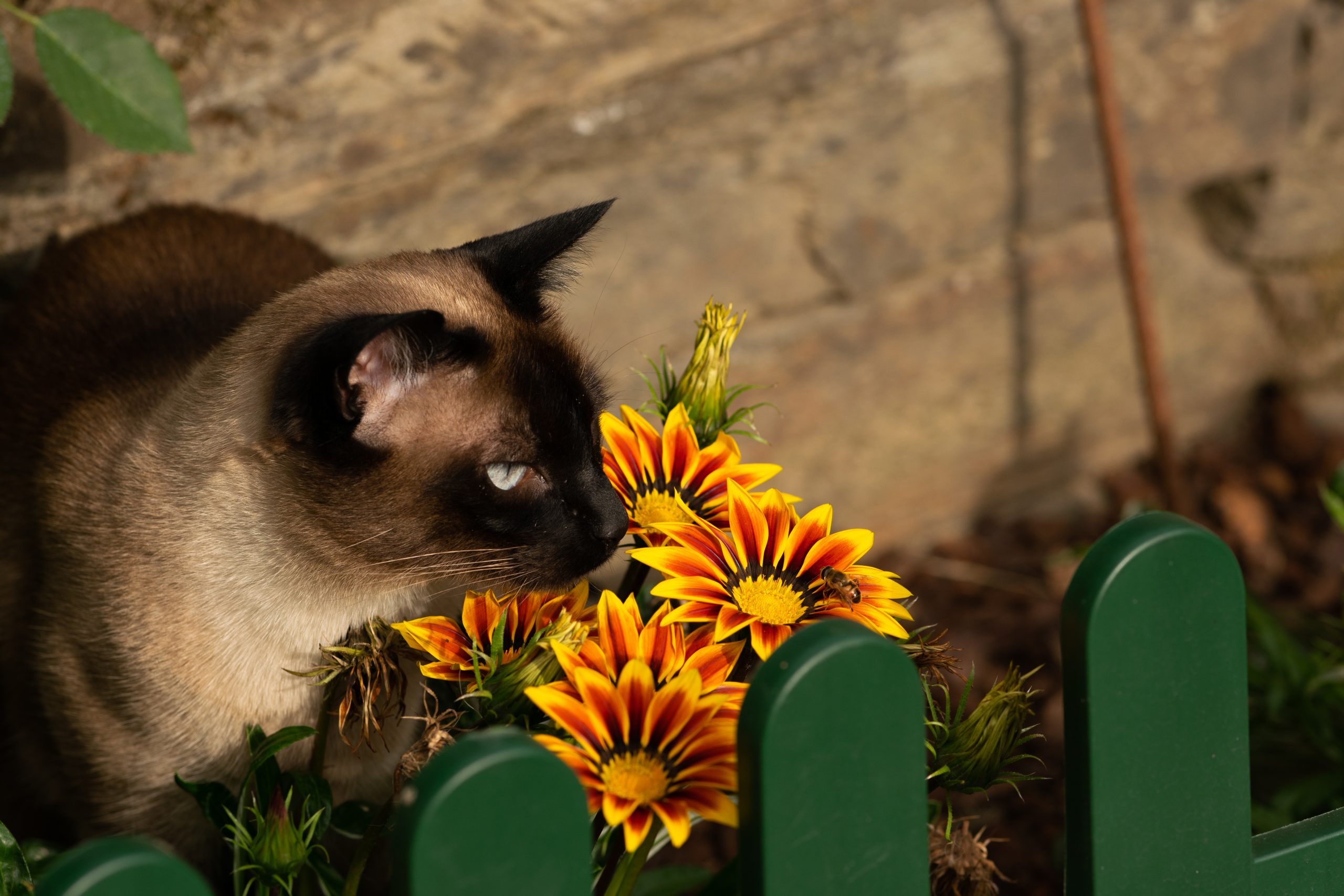
cat sniffing flowers with bee

Cat Stung by a Bee: What Should You Do?

Cats are natural hunters and sometimes will target bugs like bees. Bee stings can happen in a moment, and while most bee stings are mild and settle within a few hours, occasionally, a bee sting will require more care. Here are our tips for helping your cat when they are stung by a bee.

04/27/2026

Bee stings can happen in a split second, especially when a curious cat decides a buzzing visitor looks like a toy. Most stings are mild and manageable at home, but knowing what to look for (and when to call your vet) will help you keep your cat calm, comfortable, and safe.

Here’s a simple, reassuring guide to what to do if your cat is stung by a bee.

What Happens If a Cat Gets Stung by a Bee?

Most cats experience a quick, local reaction. Common signs include:

  • Paw shaking or sudden jumping back
  • Brief discomfort or vocalising
  • Licking or nibbling the area
  • Swelling or redness at the sting site

Cats are most often stung on the paws, nose, or mouth, usually while trying to catch a bee mid‑air, a completely natural hunting response. In many cases, swelling is mild and settles within a few hours.

How to Treat a Bee Sting on a Cat at Home

If your cat seems calm and the reaction is mild, you can help them with these gentle steps:

  1. Look carefully for a stinger
    If you can see it, scrape it out using a credit card or your fingernail. Avoid tweezers, squeezing can release more venom.
  2. Soothe the swelling
    Apply a cold compress wrapped in a cloth for a few minutes at a time.
  3. Keep an eye on your cat
    Monitor them closely for the next few hours. Mild redness or swelling is normal, but symptoms should not get worse.
  4. Discourage licking
    Gently prevent excessive licking or scratching, as this can irritate the skin. Try distracting them with a treat or encourage them to interact with you and a toy.

Never give your cat human painkillers or antihistamines, or topical sprays or creams. These can be dangerous. Call your vet if you’re unsure.

When Is a Bee Sting an Emergency?

Most stings are harmless but some cats can have a more serious reaction. Contact your vet immediately if your cat shows:

  • Breathing difficulty
  • Sudden collapse, wobbliness or weakness
  • Severe swelling, especially around the face or throat
  • Very pale gums
  • Vomiting or diarrhea
  • Lip smacking, drooling or pawing at their mouth

These symptoms may indicate an allergic reaction (anaphylaxis) and need urgent treatment. If your cat is stung inside the mouth or throat, call your vet straight away – even if they seem normal at first.

FAQs: Bee Stings in Cats

Can a bee sting be serious for my cat?
Yes — stings to the mouth or throat, multiple stings, or signs of an allergic reaction need urgent veterinary attention.

How should I remove a bee stinger from my cat?
Scrape it out gently with a flat object like a credit card. Avoid squeezing, as this can release more venom.

How long does swelling from a bee sting last in cats?
Mild swelling usually improves within a few hours. If it worsens, spreads, or involves the face or throat, speak to your vet.

Can cats have allergic reactions to bee stings?
Yes. Breathing problems, vomiting, sudden weakness or severe swelling are signs of an allergic reaction and require immediate veterinary care.

Bee stings are surprising, but most are minor. With calm, simple steps, you can help your cat feel comfortable while keeping an eye out for anything more serious. And if you’re ever unsure, your vet is always there to help you.

For more natural wellbeing advice, explore the rest of the Applaws blog.