
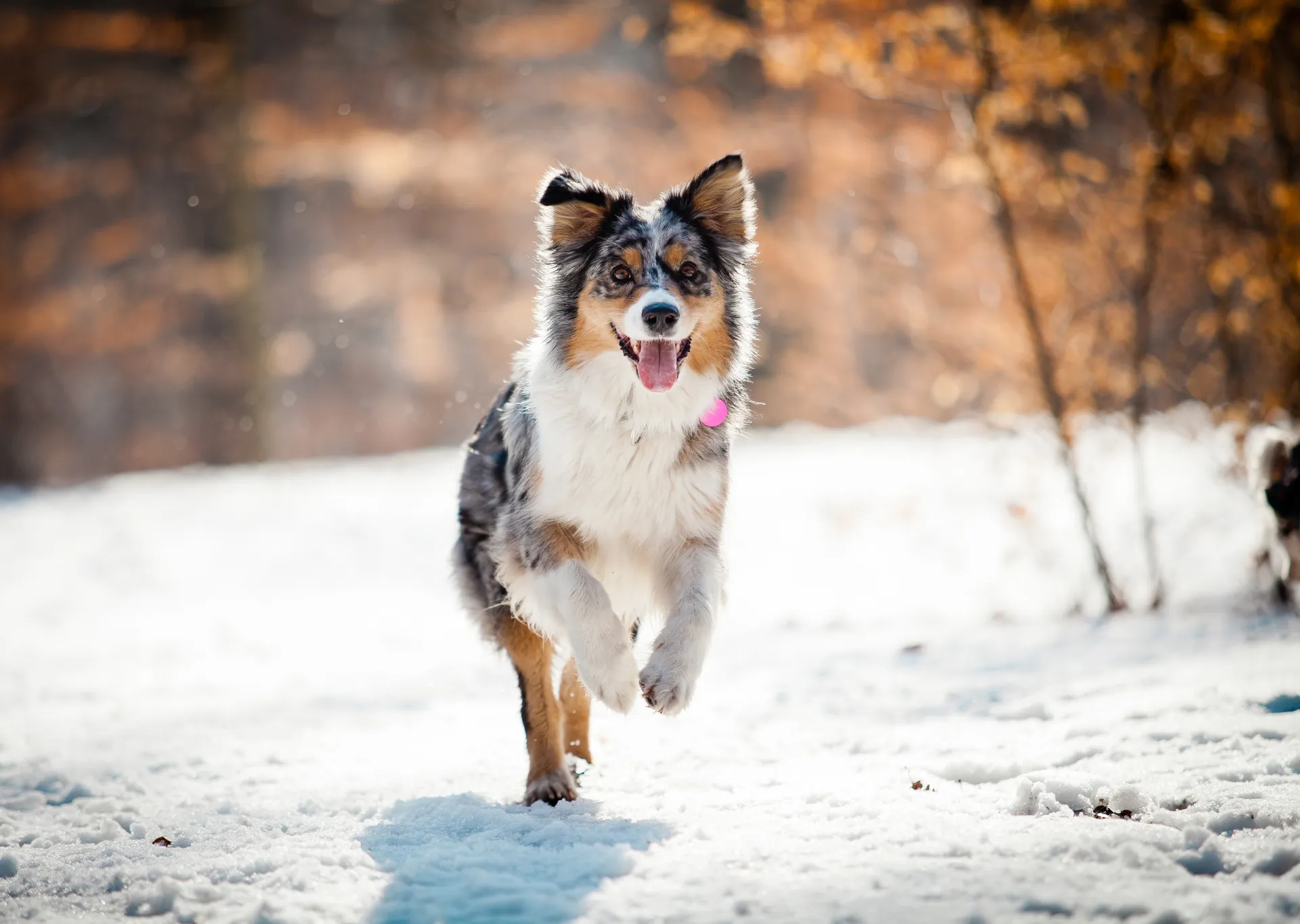
DO DOGS NEED MORE FOOD IN WINTER? A WINTER FEEDING GUIDE
Most dogs do not automatically need more food in winter. The right amount depends on their activity level, age, breed, body condition and how much time they spend outdoors. Some dogs burn more energy on frosty adventures, while others spend more time indoors and need exactly the same amount they eat all year round.
DO DOGS NEED MORE FOOD IN WINTER?
There is no one-size-fits-all answer. Winter can affect dogs differently depending on their lifestyle. A working spaniel covering miles every day has very different energy needs to a dog enjoying shorter walks and cosy afternoons on the sofa.
The best approach is to watch your dog’s body condition, appetite and energy levels rather than automatically increasing portions when temperatures drop.
HOW MUCH SHOULD DOGS EAT IN WINTER?
Start with your dog’s usual feeding amount. If they maintain a healthy weight, have steady energy and seem satisfied after meals, they probably do not need any changes.
Adult Dogs in Winter
Most adult family pets can continue eating their normal amount. If they become more active during winter walks, hiking trips or outdoor adventures, they may benefit from slightly larger portions.
Puppies in Winter
Puppies need food to support growth throughout the year. Follow life-stage feeding guidelines and avoid making major seasonal changes unless advised by your vet.
Senior Dogs in Winter
Some senior dogs become less active in colder weather, while others may need more encouragement at mealtimes. Monitor weight and appetite regularly.
WHY DOGS MAY NEED MORE OR LESS FOOD DURING WINTER
Cold Weather and Energy Use
Dogs that spend long periods outdoors may use more energy keeping warm and staying active. This can increase calorie requirements slightly.
Indoor Dogs vs Outdoor Dogs
Dogs living mainly indoors often have stable energy needs. Dogs working outdoors or joining longer winter adventures may require more fuel.
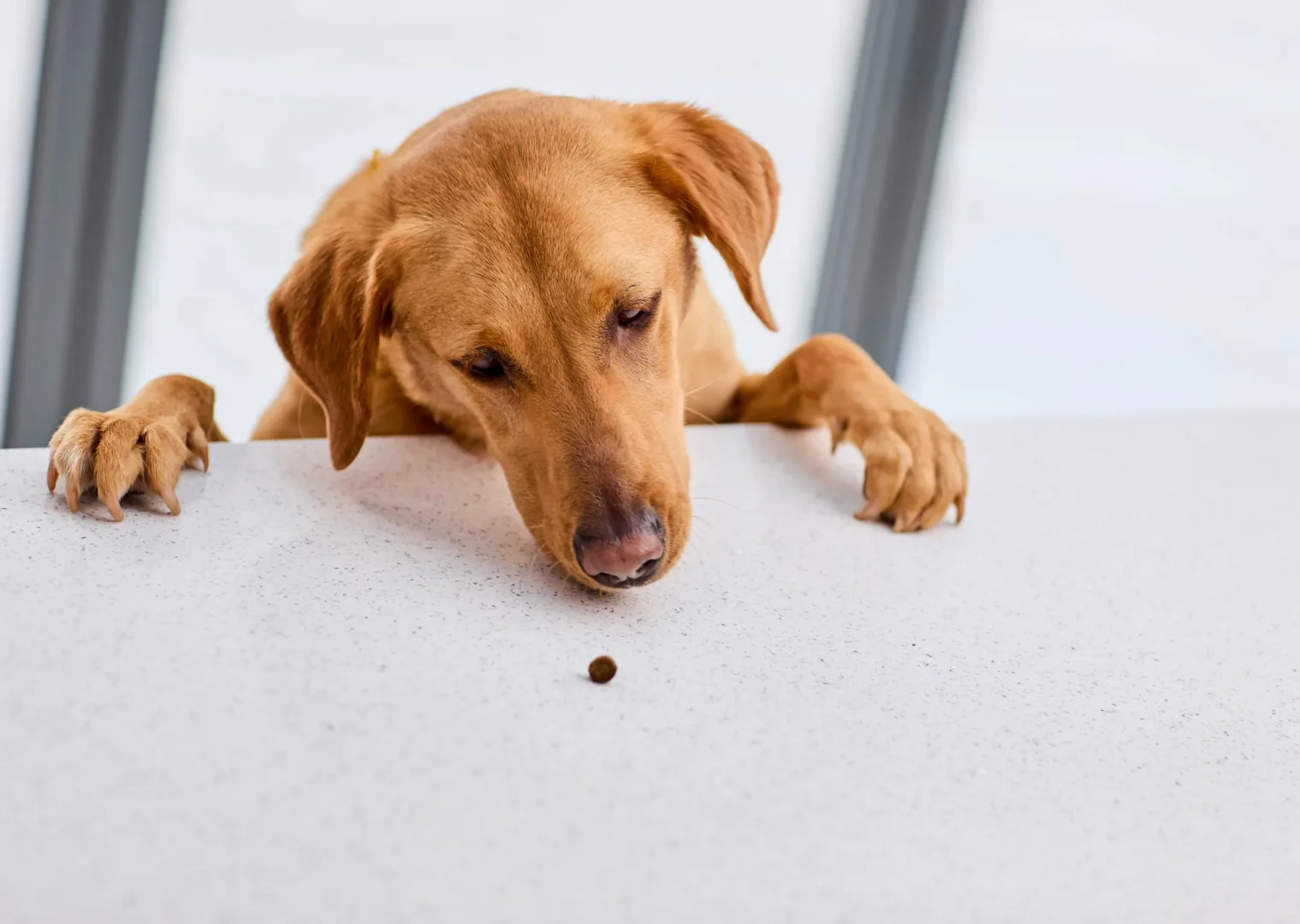
HOW TO TELL IF YOUR DOG NEEDS MORE FOOD
Signs They May Need More
- Looking leaner than usual
- Losing weight
- Increased hunger after meals
- More outdoor exercise and activity
Signs They May Need Less
- Weight gain
- Shorter walks
- More treats and snacks
- Reduced activity levels
CAN COLD WEATHER AFFECT A DOG’S APPETITE?
Why Some Dogs Eat More
Dogs that are more active in winter often come home ready for dinner. Extra activity can naturally increase appetite.
Why Some Dogs Eat Less
Some dogs become less interested in food if their routine changes or activity drops. If appetite suddenly disappears or other symptoms appear, speak to your vet.
HOW TO KEEP WINTER MEALTIMES EXCITING
After muddy woodland walks, frosty morning adventures and winter play sessions, mealtimes should be something to look forward to.
Adding Natural Flavour and Moisture
A little added flavour and moisture can help make meals more enticing, especially for dogs eating mainly dry food.
How Applaws Taste Toppers Can Help
Made with high-quality natural ingredients, Applaws Taste Toppers are designed to shake up mealtimes with naturally tasty flavour. Whether your dog is returning from a chilly morning walk or settling down after a day of winter adventures, they are an easy way to add excitement to the bowl.
Top their bowl. Feed their fun.
FAQS ABOUT FEEDING DOGS IN WINTER
Should dogs eat more during cold weather?
Only if their energy needs increase.
Do indoor dogs need more food in winter?
Usually not. Many indoor dogs maintain similar energy needs throughout the year.
Can cold weather make dogs hungry?
Yes. More activity and time outdoors can increase appetite.
Can I add toppers to dry food in winter?
Yes. Toppers can add flavour and moisture while helping make meals more exciting
Winter does not automatically mean bigger portions. Focus on your dog’s activity level, appetite and body condition. Keep meals balanced, naturally tasty and ready to fuel every wag, run and fetch.