
Best Dog Food for Sensitive Stomachs: What to Look For
How to Feed a Dog with a Sensitive Stomach
When your dog has a sensitive stomach, mealtimes can feel like a balancing act. You want food that suits them, ingredients you feel good about and enough flavour to keep tails wagging.
The best dog food for sensitive stomachs is not about taking all the fun out of the bowl. It is about choosing the right main meal, keeping changes gentle and adding excitement in a way that works for your dog.
Start with a complete and balanced food that suits your dog’s life stage, then keep their routine steady. If your dog needs a little more encouragement at mealtimes, add flavour slowly and simply, rather than changing everything at once.
At Applaws, we believe adventurous appetites deserve naturally tasty food. So if your dog needs a little more care at mealtimes, the goal is simple: keep their food steady, keep their ingredients clear and make every bowl something they still look forward to.
What Does a Sensitive Stomach Mean for Dogs?
A sensitive stomach is a common way to describe dogs who seem more easily unsettled by food changes, rich snacks or unfamiliar ingredients. It can show up as soft stools, gas, occasional vomiting, reduced appetite or a bowl that suddenly gets ignored.
It is not a diagnosis on its own, and it does not always mean something serious. But if your dog’s tummy troubles keep coming back, it is worth understanding what might be triggering them before making lots of changes to their food.
Signs Your Dog’s Food Might Not Be Agreeing with Them
Your dog might need a gentler approach to food if you notice:
- Loose stools or diarrhoea after a food change
- Vomiting after eating
- More gas than usual
- A sudden drop in appetite
- Itchy skin alongside digestive changes
- A pattern of upset after certain treats, scraps or new foods
One off-day can happen. Repeated issues are a sign to pause the guessing game and speak to your vet.
When to Ask Your Vet for Advice
If your dog seems unwell, has diarrhoea for more than 24 hours, is vomiting, has blood in their stool, refuses food, seems low in energy or appears uncomfortable, contact your vet.
Puppies, senior dogs and dogs with existing health conditions should be checked sooner. Your vet can help rule out issues such as parasites, infections, allergies or other health concerns before you make bigger changes to their diet.
What to Look for in Dog Food for Sensitive Stomachs
High-Quality Natural Ingredients
For sensitive dogs, clarity matters. Look for recipes made with high-quality ingredients and avoid changing between lots of different foods, flavours and treats too quickly.
Clear ingredients make it easier to understand what your dog is eating and to spot patterns if something does not agree with them.
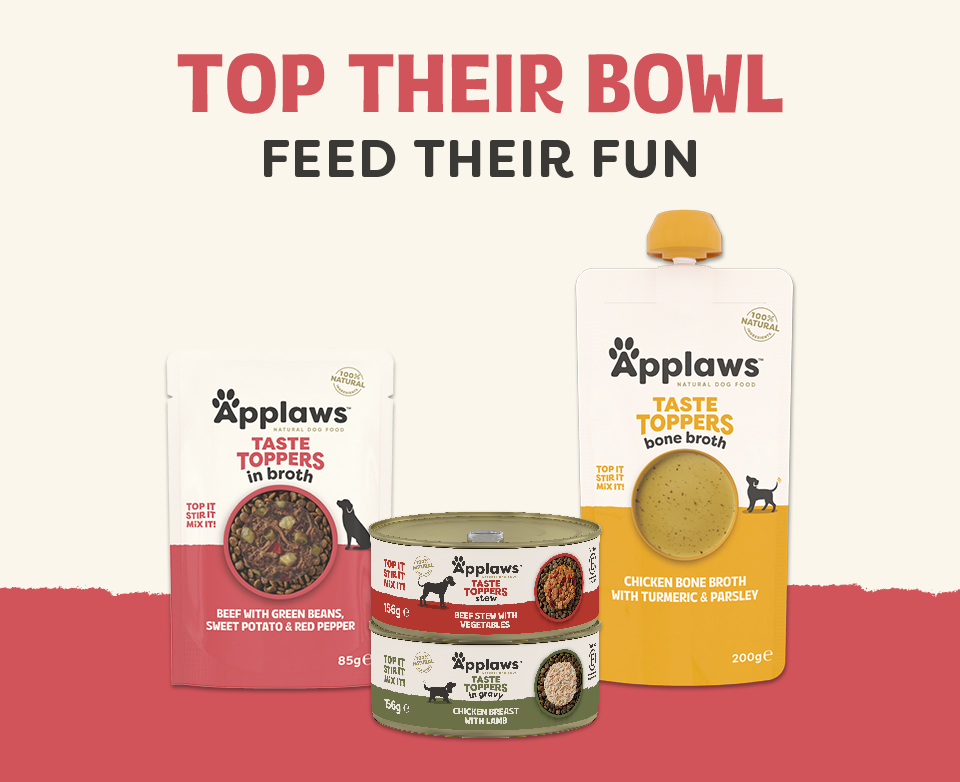
Applaws Taste Toppers are made with high-quality natural ingredients, created to bring lively flavour to everyday meals. They are made to shake up mealtimes — naturally.
Complete and Balanced Nutrition
Your dog’s main food should be complete and balanced for their life stage. That means it is designed to give them the nutrition they need every day, whether they are a puppy, adult or senior dog.
Toppers can add flavour, moisture and excitement, but they should sit alongside a complete diet rather than replace the main meal.
Recipes That Suit Your Dog’s Life Stage
Dogs change as they grow. Puppies need food made for growth, adult dogs need nutrition that supports everyday energy, and senior dogs may need a little extra care around appetite, texture and comfort.
Choose food that fits your dog’s age, size, activity level and any advice from your vet.
Simple and Consistent Feeding Routines
Sensitive stomachs often like routine. Feeding at similar times each day, using measured portions and avoiding lots of extra snacks can help keep mealtimes more predictable.
That does not mean boring. It means building excitement into the bowl in a way your dog can get used to.
How to Introduce New Food to a Dog with a Sensitive Stomach
Introduce New Foods Slowly
Even great food can upset a dog’s stomach if it is introduced too quickly. If you are switching food, adding wet food or trying a topper, take it slowly and give your dog time to adjust.
For most dogs, a 7–10 day transition is a good starting point. For dogs with very sensitive stomachs, it may be worth taking even longer.
Avoid Too Many Changes at Once
If you change the main food, treats, topper and portion size all at the same time, it becomes almost impossible to know what is working.
Make one change at a time. Let their tummy settle into the new routine before trying the next bowl upgrade.
Measure Portions Carefully
Too much food can be just as disruptive as the wrong food. Use the feeding guide as a starting point and measure meals carefully, especially if you are adding toppers or wet food.
If you add something extra to the bowl, adjust the rest of the meal so your dog is not getting more than they need.
Can Dogs with Sensitive Stomachs Eat Different Foods?
Yes, dogs with sensitive stomachs can still enjoy variety. The trick is to add it in a controlled way, not by changing everything in the bowl at once.
Once you have found a food that suits your dog, keep that as the steady base. From there, you can explore gentle ways to add taste, texture and moisture without making mealtimes more complicated than they need to be.
How to Add Flavour Without Upsetting Their Stomach
Start small. A little added flavour can make a big difference for fussy dogs, but sensitive stomachs need time to adjust.
Choose one topper, flavour or texture at a time and keep the rest of the meal consistent. If your dog enjoys it and their digestion stays settled, you can build from there.
Can Wet Food Help Dogs with Sensitive Stomachs
Wet food can add moisture, aroma and a softer texture to the bowl, which some dogs find more appealing. It can be especially helpful for dogs who are less enthusiastic about dry food or who enjoy a little more moisture at mealtimes.
As with any change, introduce wet food slowly and adjust portions so your dog’s overall meal stays balanced.
What If My Dog Is a Fussy Eater?
Fussy eating can be frustrating, especially when you are trying to keep your dog’s stomach settled. Try to keep mealtimes calm and consistent, rather than offering lots of different options every time they hesitate.
A topper can help bring the bowl back to life with extra aroma and flavour, while still keeping your dog’s usual food as the base.
Are Food Toppers Good for Dogs with Sensitive Stomachs?
Food toppers can be a good option for some dogs with sensitive stomachs, especially when you want to add flavour and moisture without completely changing their main food.
The key is to choose a simple, natural topper and introduce it gradually. If your dog has ongoing digestive problems, speak to your vet before adding anything new.
Benefits of Food Toppers for Dogs with Sensitive Stomachs
Food toppers can help make everyday meals more enticing by adding flavour, aroma and moisture. For dogs who eat mostly dry food, they can make the bowl feel more exciting without needing to switch their full diet.
They can also be useful for fussy eaters, helping to create those “racing to the bowl” moments without overcomplicating mealtimes.
How to Add Applaws Taste Toppers to Your Dog’s Food
Applaws Taste Toppers are made for dogs with adventurous appetites. Packed with naturally tasty flavour, they are a simple way to top their bowl and feed their fun.
If your dog has a sensitive stomach, start with a small amount on top of their usual food and keep the rest of the bowl the same. If they enjoy it and their digestion stays settled, gradually build up to the recommended serving amount.
Slow and steady keeps the adventure fun.
What to Look for in a Dog Food Topper
Look for a topper made with high-quality natural ingredients, clear feeding guidance and flavours your dog will love. It should be easy to add to their usual food and simple to portion as part of their daily routine.
Taste Toppers come in a variety of delicious flavours, so your dog can discover more from mealtimes. If your dog is sensitive, choose one flavour to start with and stick with it while they adjust.
FAQs About Dog Food for Sensitive Stomachs
What Is the Best Dog Food for Sensitive Stomachs?
The best dog food for sensitive stomachs is complete and balanced, suited to your dog’s life stage, made with clear ingredients and introduced gradually. The right choice is the one that keeps your dog comfortable, well-fed and excited for mealtimes.
Is Wet or Dry Food Better for Dogs with Sensitive Stomachs?
Wet, dry or mixed feeding can all work. Wet food can add moisture and aroma, while dry food is convenient and easy to portion. Many dogs enjoy a mix, as long as changes are introduced slowly and portions are adjusted.
Can I Use Food Toppers for a Dog with a Sensitive Stomach?
Yes, depending on your dog. Start with a small amount, introduce it gradually and keep the rest of their bowl consistent. If your dog has ongoing digestive problems, check with your vet first.
How Do I Know If My Dog’s Food Is Working?
A food that suits your dog should support steady appetite, consistent stools, good energy and a healthy body condition. If something feels off, do not keep changing foods without advice.
When Should I Speak to a Vet About My Dog’s Stomach?
Speak to your vet if your dog has diarrhoea for more than 24 hours, is vomiting, seems unwell, has blood in their stool, loses weight or has repeated digestive issues.
Bottom Line: Keep It Simple, Steady and Full of Flavour
Sensitive stomachs do not have to mean dull dinners. With the right main food, slow transitions and a consistent routine, you can help keep your dog’s bowl simple, steady and naturally tasty.
And when they need a little extra excitement? Applaws Taste Toppers bring high-quality natural ingredients and tail-wagging flavour to everyday meals.
Top their bowl. Feed their fun. A flavour adventure is just a topper away.